
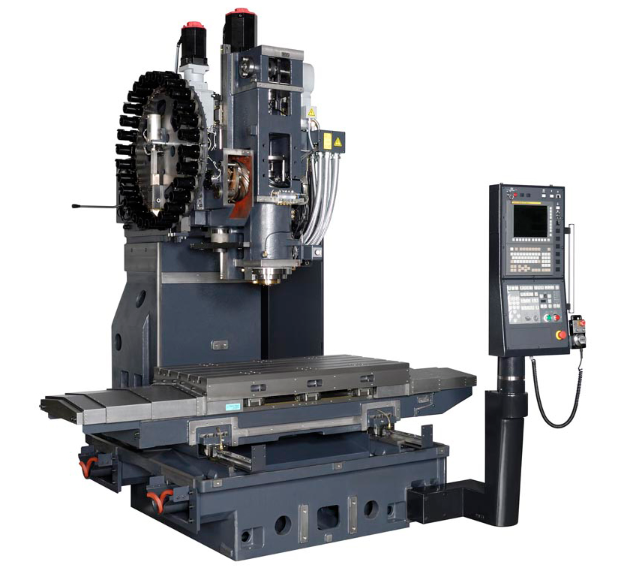
A CNC Vertical Machining Center (VMC) is a type of milling machine where the spindle axis is vertically oriented. This orientation gives the VMC its distinctive design: the spindle moves vertically along the Z-axis while the workpiece is secured to a horizontal table that moves in X and Y directions. This configuration makes VMCs the most common type of CNC machine tool in manufacturing facilities worldwide, prized for their versatility, accessibility, and ease of operation.
The VMC machine full form in technical documentation is Vertical Machining Center. These machines range from compact 3-axis units suitable for small job shops to large 5-axis systems used in aerospace and automotive production. The defining characteristic of a VMC is that the cutting tool approaches the workpiece from above, making it naturally suited for flat surfaces, pocket milling, drilling, tapping, and contouring operations on parts that fit within the machine’s work envelope.
VMC vs HMC: Key Differences
While both vertical and horizontal machining centers perform similar milling operations, their design differences lead to distinct application advantages. The choice between them depends on the part geometry, production volume, and specific machining requirements.
| Characteristic | Vertical Machining Center | Horizontal Machining Center |
|---|---|---|
| Spindle Orientation | Vertical (downward) | Horizontal (sideways) |
| Chip Evacuation | Moderate chips can accumulate | Excellent chips fall away by gravity |
| Typical Workpiece Size | Small to medium (up to 1000 mm) | Medium to large (up to 2000 mm+) |
| Setup Complexity | Lower easier access for operators | Higher requires pallet systems |
| Cost | Lower initial investment | Higher typically 1.5-2 times VMC cost |
| Best For | Prototyping small batches flat parts | Production heavy cubic parts |
The VMC full form is sometimes expanded as Vertical Milling Center, though Vertical Machining Center is the technically correct term. Modern VMCs include features like automatic tool changers (ATC), coolant through spindle, rigid tapping capabilities, and CNC controls that support simultaneous multi-axis interpolation. These features make VMCs suitable for everything from simple 2D drilling operations to complex 3D contouring of mold cavities and aerospace components.
For buyers evaluating machine vertical machining center options, the critical specification is the machine’s rigidity. A VMC frame must withstand the cutting forces generated during heavy milling without excessive deflection. Box-way machines offer superior damping for heavy cutting, while linear-guide machines provide faster traverses suitable for high-speed machining of aluminum and non-ferrous materials.
The CNC VMC full form is Computer Numerical Control Vertical Machining Center, indicating the machine is controlled by a computer that interprets G-code instructions. Modern VMCs from manufacturers like Haas, DMG Mori, Mazak, and Okuma offer vmc machine full form capabilities that include probing cycles, tool life management, and remote monitoring interfaces. For job shops and contract manufacturers, the vmc full form represents a versatile production platform that can handle 80 percent of common machining tasks efficiently.
When considering VMC vs HMC for production, evaluate the part geometry. Parts requiring operations on multiple faces are typically more productive on an HMC with a rotary pallet system, while parts with all features on one face are ideal for VMC production. For prototyping and small batch work, cnc vmc full form machines offer the best balance of flexibility, cost-effectiveness, and ease of setup.
